
Last updated: 13 November 2026 · Reviewed by Vd. Himanshu Jha, Ayurveda Siddhi · Source: official NCISM curriculum document
Download free Kaumarbhritya (Kaumarabhritya) notes PDF for BAMS: digital handwritten Part A and Part B notes written to the latest NCISM syllabus, older Hindi notes (कौमारभृत्य नोट्स) and a chapter-wise MCQ hub. Under the NCISM curriculum, Kaumarabhritya (Ayurvedic Pediatrics, subject code AyUG-KB) is a 3rd Professional BAMS subject with 1 theory paper and 300 total marks, taught in 275 hours. Below the downloads you will find the official topic-wise marks for all 22 topics, the practical exam split and a study plan.
Jump to: Notes PDF download · Kaumarabhritya at a glance · Marks & paper pattern · Topic-wise marks · Practical exam · Study plan · More notes & PYQs · FAQs
Kaumarbhritya Notes PDF Download
| Notes | Language / syllabus | Download |
|---|---|---|
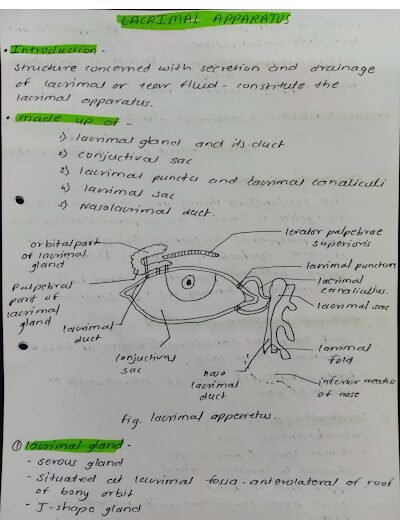
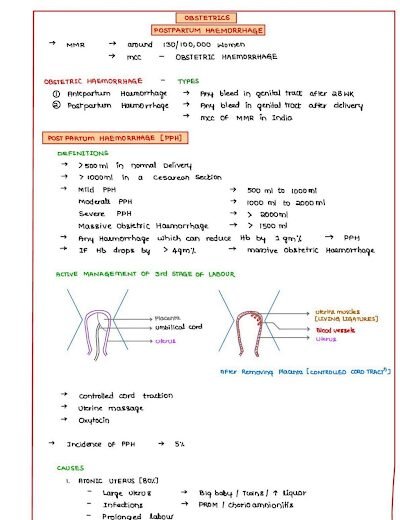
| Kaumarabhritya Part A – digital handwritten notes | Latest NCISM syllabus (III prof) | Open notes |
| Kaumarabhritya Part B – digital handwritten notes | Latest NCISM syllabus (III prof) | Open notes |
| Kaumarabhritya MCQ hub – chapter-wise MCQs | Latest NCISM syllabus | Practise MCQs |
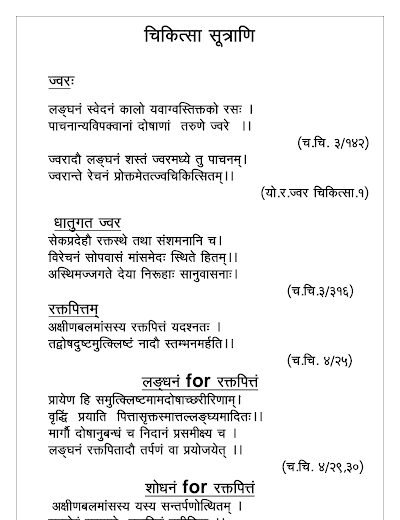
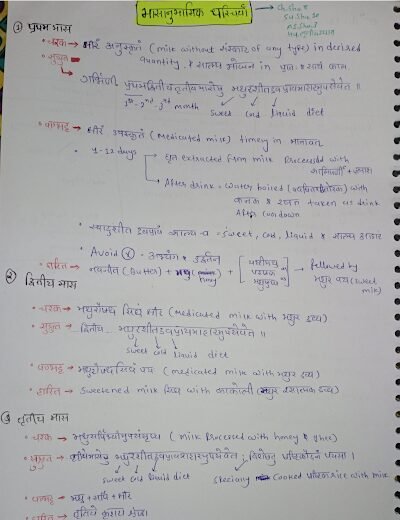
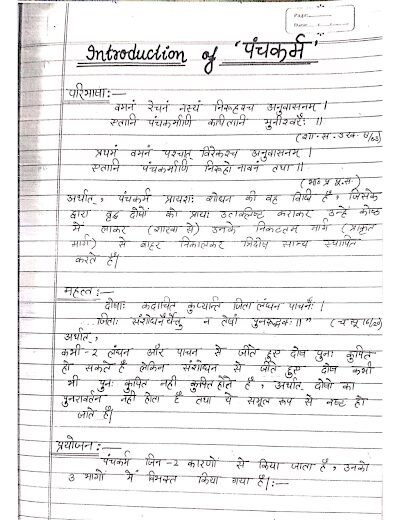
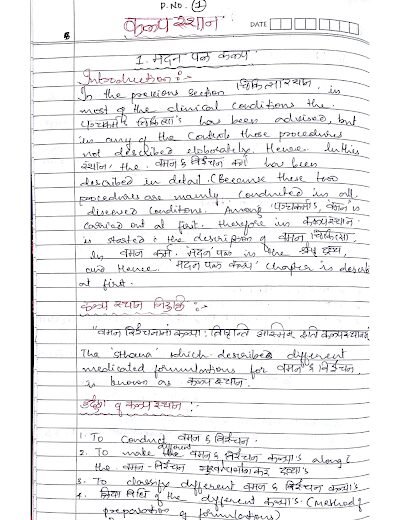
| Kaumarvritya notes Part A (कौमारभृत्य नोट्स) | Hindi, earlier syllabus | Open notes |
| Kaumarvritya notes Part B (कौमारभृत्य नोट्स) | Hindi, earlier syllabus | Open notes |
| Balagraha notes (बालग्रह) | Hindi | Open notes |
| Kaumarabhritya Aushadha yoga (pediatric formulations) | English | Open notes |
Official syllabus: NCISM AyUG-KB curriculum PDF (ncismindia.org) · all 3rd prof subjects are on the NCISM III prof BAMS syllabus page.
Kaumarabhritya Syllabus at a Glance (NCISM)
| Subject | Kaumarabhritya (Pediatrics) |
|---|---|
| NCISM subject code | AyUG-KB |
| Professional year | III Professional BAMS (final year) |
| Applicable to | 2021-22 batch, from academic year 2024-25 (for 5 batches or until further NCISM notification) |
| Theory papers | 1 paper of 100 marks |
| Total marks | 300 (Theory 100 + Practical component 200) |
| Teaching hours | 275 (Lectures 100 + Non-lecture theory 53 + Non-lecture practical 122) |
| Elective attached | Set-TB (10 marks) |
| Special focus | The first 1000 days of life, Bala Panchakarma, growth and development |
Kaumarabhritya Marks Distribution and Paper Pattern
| Component | Marks |
|---|---|
| Theory paper | 100 |
| Practical | 100 |
| Viva | 60 |
| Elective (Set-TB) | 10 |
| Internal assessment (IA) | 30 |
| Total | 300 |
The theory paper is 3 hours, 100 marks, with all questions compulsory: 20 MCQs (1 mark each), 8 short answer questions (5 marks each) and 4 long answer questions (10 marks each).
Kaumarabhritya Topics and Weightage (Term-wise)
NCISM gives marks to single topics or groups of topics; the marks are the maximum the paper can carry from that group. “LAQ” shows whether a 10-mark long question may be asked.
| # | Topic | Term | Marks | LAQ allowed |
|---|---|---|---|---|
| 1 | Introduction to Kaumarabhritya, Vayobheda | 1 | 1 | No (MCQ only) |
| 2 | Bala Samvardhana – growth and development, milestones, Danta Vijnana | 1 | 7 | No |
| 3 | Navajata Vijnana – neonatology, neonatal resuscitation, newborn care and diseases | 1 | 11 | Yes |
| 4 | Stanya Vijnana – breast milk, breastfeeding, Stanya dushti, Prashana | 1 | 11 (topics 4–5) | Yes |
| 5 | Bala Poshana and Vyadhikshamatva – child nutrition, Swarnaprashana, immunization schedule, first 1000 days | 1 | Yes | |
| 6 | Kuposhana Roga – Phakka, Karshya, Parigarbhika, SAM/MAM, failure to thrive | 2 | 7 (topics 6–7) | No |
| 7 | Balaroga Pariksha Vidhi and Chikitsa Siddhanta – pediatric examination, posology | 2 | No | |
| 8 | Kulaja and Sahaja Roga – genetic and congenital disorders | 2 | 5 | No |
| 9 | Graha Roga and Aupasargika Roga – infectious diseases, Krimi | 2 | 8 | No |
| 10 | Swasana Roga – respiratory disorders (cold, tonsillitis, asthma, pneumonia) | 2 | 10 (topics 10–11) | Yes |
| 11 | Mahasrota Roga – vomiting, diarrhoea, colic, dehydration and ORS | 2 | Yes | |
| 12 | Rasa Rakta Roga – Pandu, Kamala, Raktapitta, hepatosplenomegaly | 2 | 10 (topics 12–13) | Yes |
| 13 | Antahsravee Granthi Roga – type 1 diabetes, thyroid, puberty disorders | 2 | Yes | |
| 14 | Mutravaha Sroto Roga – phimosis, UTI, nephritis, nephrotic syndrome | 3 | 5 (topics 14–15) | No |
| 15 | Sandhi Roga – Amavata, Vatarakta, Sandhigata vata in children | 3 | No | |
| 16 | Twak Roga – scabies, eczema, atopic dermatitis, psoriasis | 3 | 13 (topics 16–18) | Yes |
| 17 | Sira Snayu Roga – hydrocephalus, epilepsy, cerebral palsy | 3 | Yes | |
| 18 | Unmada Roga – ADHD, autism, learning disability, enuresis, pica | 3 | Yes | |
| 19 | Atyayika Roga – pediatric emergencies, febrile seizures, poisoning, shock, fluid resuscitation | 3 | 12 (topics 19–22) | Yes |
| 20 | Bala Panchakarma | 3 | Yes | |
| 21 | Kishora Swasthya – adolescent health | 3 | No (MCQ only) | |
| 22 | Anya Roga – miscellaneous diseases (inborn errors of metabolism, celiac disease, Wilson’s disease and others) | 3 | No (MCQ only) |
Kaumarabhritya Practical Exam: How the 200 Marks Are Split
| Head | Marks |
|---|---|
| Skill-based stations – diagnostic report (5), demonstration such as newborn resuscitation or breastfeeding (10), case-based judgement and referral (5), prescription writing (5), dosage / Pathya-apathya (5) | 30 |
| Practical case taking – history, growth and development, systemic examination, Dosha-Dhatu pariksha, investigations, diagnosis, treatment, prescription and parent counselling, communication | 60 |
| Structured viva – 15 questions across all topics + communication and confidence (5) | 60 |
| Practical record – neonatal (3), growth (4), developmental disorder (4), nutrition (2), deficiency disorder (2) and Sroto vikara (10) case sheets | 10 |
| Elective (Set-TB) | 10 |
| Internal assessment | 30 |
| Total | 200 |
How to Study Kaumarabhritya: A Weightage-based Plan
- Term 1 topics are a third of the paper. Navajata Vijnana (11), Stanya Vijnana with Bala Poshana (11) and growth and development (7) add up to 30 marks, and newborn care, breastfeeding and immunization are also asked in the practical.
- Prepare full long answers only where LAQs are allowed. Neonatology, breast milk and nutrition, respiratory and GI disorders, blood and endocrine disorders, skin, nervous system and behavioural disorders, emergencies and Bala Panchakarma. Nutritional, congenital, infectious, urinary and joint disorders come only as MCQs and SAQs.
- Learn the schedules and numbers. Milestones, growth parameters, the National Immunization Schedule, ORS and posology (Oushadha Matra Nirdharana) are easy marks in MCQs and in the dosage station.
- Practise the skill stations. Newborn resuscitation, breastfeeding technique, prescription writing and pediatric dosage are 30 marks of the practical.
- Fill the 25 case sheets early. The record needs 3 neonatal, 4 growth, 4 developmental, 2 nutrition, 2 deficiency and 10 Sroto vikara cases.
- Revise with MCQs. Use the Kaumarabhritya MCQ hub and the pediatrics key points for PG entrance.
More Kaumarabhritya Notes and Question Papers
- BAMS 3rd year (final prof) syllabus – all 9 subjects
- BAMS 3rd year notes – all subjects
- Kaumarabhritya notes and question paper for MD Ayurveda
- BAMS 3rd year previous year question papers
- BAMS 3rd year question papers 2021 (MPMSU)
- BAMS 3rd year question paper 2023
- Prasuti Tantra evam Stree Roga notes PDF · Gynaecology and Obstetrics PPTs
- Kayachikitsa notes PDF
- Swasthavritta notes PDF
- How to get good marks in the practical exam
Kaumarbhritya Notes – FAQs
Is Kaumarabhritya in BAMS 3rd year?
Yes. Under the NCISM curriculum (2021-22 batch onwards), Kaumarabhritya (AyUG-KB) is a 3rd Professional BAMS subject, which is the final year.
How many papers are there in Kaumarabhritya?
One theory paper of 100 marks. With the practical, viva, elective and internal assessment, the subject carries 300 marks.
What are the total marks of Kaumarabhritya in BAMS?
300 marks: 100 theory, 100 practical, 60 viva, 10 elective (Set-TB) and 30 internal assessment.
What is the Kaumarabhritya paper pattern?
The paper is 3 hours and 100 marks: 20 MCQs of 1 mark, 8 short answer questions of 5 marks and 4 long answer questions of 10 marks. All questions are compulsory.
Which Kaumarabhritya topics carry the most marks?
Twak, Sira Snayu and Unmada Roga together (13), the emergency, Bala Panchakarma, adolescent health and miscellaneous group (12), Navajata Vijnana (11) and Stanya Vijnana with Bala Poshana (11).
Kaumarbhritya, Kaumarabhritya or Kaumarvritya – which is correct?
All three spellings refer to the same subject, Ayurvedic pediatrics (कौमारभृत्य). NCISM uses “Kaumarabhritya”.
Join the Ayurveda Siddhi BAMS Community
Get notes, question papers and exam updates for BAMS students first on our groups: Join WhatsApp group · Telegram channel · YouTube · Instagram
Discussion
3 comments · Ask a doubt, share a tip, help a classmate
Sir agadatantra notes if possible please send
please provide rognidan notes
Sir please provide agadatantra